

By NotForPublicRelease.com
“When you have eliminated the impossible, whatever remains, however improbable, must be the truth.”
— Sherlock Holmes
“The reader may well ask, why does this detective story end in a belief in fairies?”
— Sir Arthur Conan Doyle
I. Introduction: The Paradox of the Rationalist’s Creator
Sir Arthur Conan Doyle gave the world its most iconic symbol of rational thought: Sherlock Holmes, the violin-playing, logic-wielding, cocaine-using detective who solved crimes through observation and deduction. Holmes, with his relentless pursuit of facts over superstition, became the prototype for the modern detective and a cultural symbol of reason.
But Doyle himself? He believed in fairies.
And spirits.
And psychics.
And he spent the last third of his life in a very public war of ideas with his once-friend, Harry Houdini, over whether the dead could speak to the living.
This is the story of how the man who birthed the greatest skeptic in fiction became one of the most ardent spiritualist crusaders in history. And it’s a story that reveals the strange, fragile human need to believe — even from those who taught the world not to.
II. Sherlock Holmes: The God of Reason
In 1887, Doyle published A Study in Scarlet, introducing a new kind of hero — a consulting detective who didn’t fight with fists or guns, but with his brain. By the time The Adventures of Sherlock Holmes hit magazine stands in the 1890s, Holmes was a sensation.
Holmes was science incarnate.
He used footprints, cigar ash, handwriting analysis, chemistry, and deduction to solve crimes. He scoffed at supernatural explanations. He mocked the idea of ghosts or curses. He was Victorian England’s response to an era teeming with mystics and seances — a human microscope, dissecting mystery with no patience for fantasy.
The public loved him for it.
And they assumed his creator shared the same mindset.
III. Doyle’s Personal Beliefs: Ghosts Over Logic
In his early years, Sir Arthur Conan Doyle was, by all accounts, a man of science. Trained as a physician, he was well-versed in biology and medicine. He brought that scientific lens into his fiction.
But his personal life told a different story.
After the deaths of his son Kingsley, his brother, his two brothers-in-law, and later his wife, Doyle — like so many in the wake of World War I — turned to spiritualism for comfort. Spiritualism was a booming movement that promised communication with the dead through mediums, séances, and automatic writing.
Doyle didn’t just believe it.
He became its most vocal evangelist.
In 1918, he declared his belief publicly. He joined the Society for Psychical Research, gave lectures, wrote books, and donated money to support spiritualist causes. He went on global tours, giving talks to thousands. His book The New Revelation (1918) proclaimed that a new spiritual science had arrived — one that offered proof of the afterlife.
And yes, he believed in fairies.
IV. The Cottingley Fairies: A Crisis of Credibility
The most infamous episode of Doyle’s spiritualist career began in 1917, when two Yorkshire girls — Elsie Wright and Frances Griffiths — produced a series of photographs showing tiny winged fairies dancing in the woods.
They were charming and obviously fake to modern eyes. But Doyle was enthralled.
He published an article in The Strand Magazine (the same magazine that published Holmes) titled “Fairies Photographed”, followed by the book The Coming of the Fairies (1922). He included the photographs and laid out his argument that the images were genuine.
To the public, it was absurd.
To Doyle, it was proof of another dimension.
Even after the girls later confessed to faking the photos using cutouts from a children’s book, Doyle never accepted their admission. He claimed they really saw fairies and had lied only to avoid embarrassment.
“The reader may feel that I have been too credulous,” Doyle wrote, “but he will also, I trust, feel that there is a case to be answered.”
To many, it was clear: Doyle had become the very type of man Holmes would have debunked.
V. Enter Houdini: The Skeptic Showman
While Doyle was embracing mysticism, his friend Harry Houdini was on a very different path.
Houdini — the Hungarian-American magician and escape artist — had spent years mastering illusion. He knew how mediums faked table raps, spirit writing, and ectoplasm. And he set out to expose them.
In the early 1920s, Houdini began a crusade against spiritual fraud. He infiltrated séances, recreated their tricks on stage, and challenged anyone to produce genuine phenomena under scientific conditions. He even offered a $10,000 prize to any medium who could demonstrate real spirit communication. No one ever claimed it.
Initially, Doyle and Houdini were friends. Doyle admired Houdini’s “miraculous” escapes. He even suggested they were evidence of supernatural powers.
Doyle: “No normal human could do what you do. You must be using psychic energy.”
Houdini: “No, it’s just skill and practice.”
This was the wedge. And then came the séance that ended it all.
VI. The Séance That Killed a Friendship
In 1922, Doyle’s wife Jean claimed to have developed psychic abilities. She offered to conduct a séance to contact Houdini’s deceased mother, Cecilia.
The session was held in Atlantic City. Jean Doyle went into a trance and began automatic writing — a common spiritualist technique. She “channeled” a message from Houdini’s mother… in perfect English.
But Cecilia Houdini had been a Hungarian-speaking Jewish woman who spoke no English in life. The message was signed with a Christian cross.
Houdini was devastated.
He didn’t embarrass the Doyles publicly at first, but he privately dismissed the séance as a fraud — either sincere or manipulative. Doyle, in turn, accused Houdini of deliberately rejecting the truth and began writing articles attacking him.
Doyle’s belief became more extreme: he claimed Houdini had supernatural powers himself, and was using them to sabotage genuine mediums. He believed Houdini was a kind of anti-spiritualist magician — a dark agent of denial.
“Houdini is the greatest physical medium of modern times, but he is using his gifts to discredit the very thing he should be supporting.”
— Sir Arthur Conan Doyle
Their friendship was over.
VII. The War of Belief: Logic vs. Grief
This wasn’t just a personal dispute. It was a war between worldviews.
- Doyle believed science would eventually prove the supernatural.
- Houdini believed that grief made people vulnerable — and that con artists exploited that vulnerability.
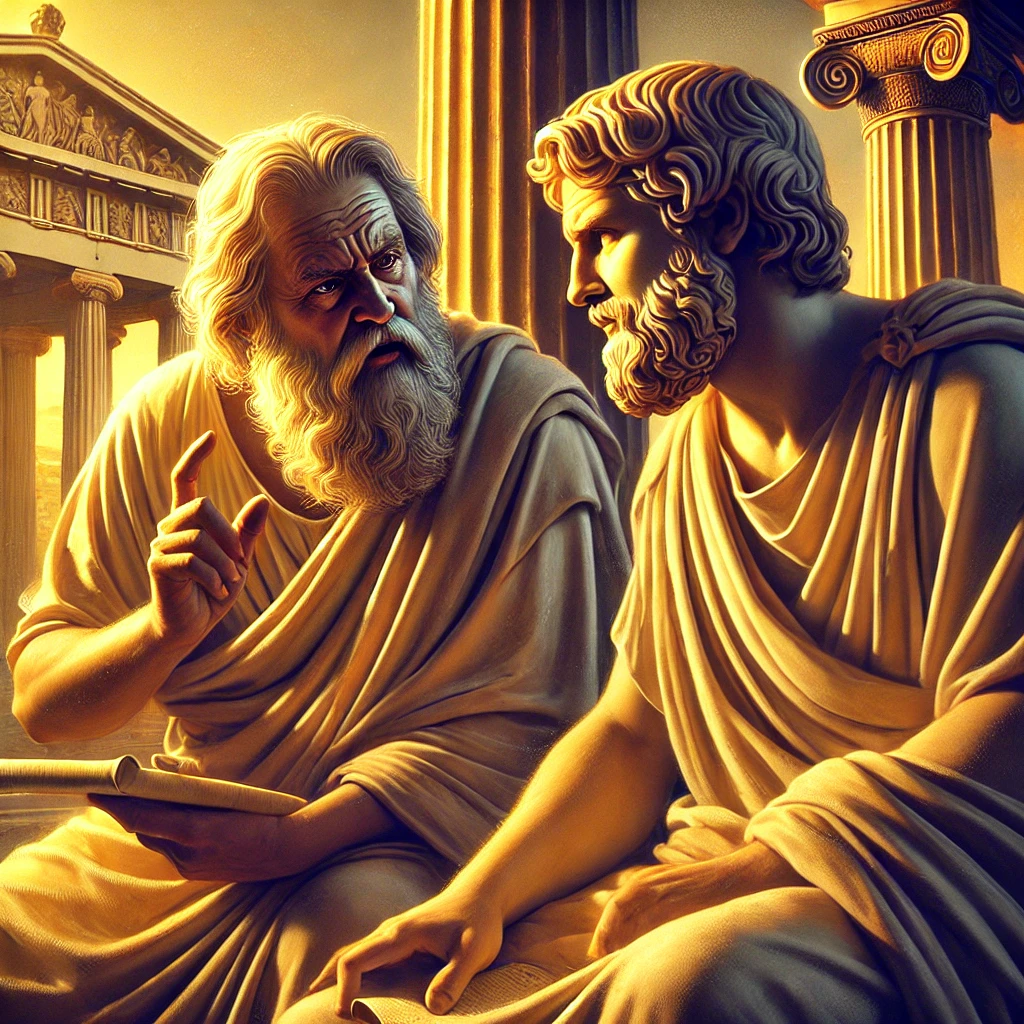
Holmes would have sided with Houdini. In fact, Holmes did, in fiction after fiction. The detective never once accepted a supernatural explanation, no matter how convincing. He always found the logical thread.
So how did Doyle create such a man? The irony is almost too neat.
Some scholars believe Holmes was Doyle’s alter ego — the man of reason he admired but could never fully be. Others suggest Holmes was a therapeutic creation, a way for Doyle to control a world he found increasingly unpredictable and painful.
VIII. Legacy and Aftermath
Doyle died in 1930, still believing passionately in spiritualism.
Houdini had died in 1926 — and even after death, Doyle believed Houdini would return through a medium. Spoiler: he didn’t.
Holmes, however, never left.
Today, Sherlock Holmes is more popular than ever. He’s been portrayed by over 75 actors on screen. He’s become a symbol not just of intellect, but of skeptical inquiry, scientific method, and evidence-based thinking.
Meanwhile, Doyle’s spiritualist writings are footnotes. The Cottingley Fairies are remembered more as an odd hoax than a movement. Houdini, interestingly, has found new respect as a skeptic hero.
IX. Conclusion: The Man Who Believed Too Much
Sir Arthur Conan Doyle’s life is a cautionary tale — not of stupidity, but of what happens when grief overrides reason.
He gave us Sherlock Holmes, a character who trusted no one, dismissed anything he couldn’t verify, and insisted on truth above all else.
But Doyle himself? He trusted too much.
He was too human.
In the end, perhaps that’s what makes the story so compelling. We all want to believe something. Doyle chose to believe in fairies. He chose to believe his son wasn’t gone forever. He chose to believe in ghosts — because, sometimes, the truth hurts more than the lie.
🔎 Related Feature: [Top 10 Greatest Fictional Detectives of All Time]
From Holmes to Batman to Columbo — who truly reigns supreme in the world of investigative fiction?